

Ceramica Pajaros Domingo
The town square in Guanjuato Centro is flanked on all sides by cafes, restaurants and little boutiques. The center is teeming with artists and bohemia - a beautiful haven of creativity and color. Nearly every night of the week, the park is filled with families, laughing children and roaming mariachi bands.
The stores on the square stay open for the festivities and this particular boutique was tiny. I could nearly stretch my arms from one side to the other. The right side was beautiful hand-made local leather goods. The left side was pottery that took my breath away. As I studied the pieces, it was clear each was made by hand. Made with passion and love that is rare. I wanted to see more. To know more.
The clerk told me that the artists’ studio was not so far away and gave me the address. She told me I could see more of the artists’ work at his studio, but they are only open early in the day. Perfect! We were leaving town early the next day and I was excited to meet the artist.
Riding a motorcycle makes navigating old Mexican towns a little easier – the streets can be narrow and impassable in cars. But Waze took us only so far before we had to park the bike and climb stairs. As we wound our way up the hills on unnamed walks and lanes, we passed a tiny Catholic church, filled to it’s capacity of about 75 worshippers, singing on a random Tuesday morning. Narrow stairways passed private homes that ran one into the next, and tiny bodegas built into the mountainside.
We found what appeared to be the address, but it was just a simple wooden door and no studio. A quick inquiry at the next bodega told us we were on the back side of where we wanted to be, so we hiked up and around the block, only to find a metal gate at the proposed address.
As we headed back to where we’d started, I asked a random passerby if she’d ever heard of “Ceremica Pajaros” or an artist named Domingo. She laughed and said, “Claro que sí, el es mi hermano” (Of course, he’s my brother). Delighted with this chance encounter, she promised to take me to him.
We found ourselves back at the same metal gate that looked up two flights of stairs into the mountain. She shouted up the stairs “Hey, Domingo, there are some gringos here to see you” (or something very close to that, in Spanish, of course.)
A very large and unyielding man appeared at the top of the stairs. He wasn’t smiling.
It quickly became apparent that this was neither a store nor a studio open to the public but was his personal space and home. In my best Spanish, I apologized profusely for the intrusion and assured him I was only there because I’d seen his pottery and fallen in love. Still no smile, but he invited us up.
I felt a little trepidation as I tucked behind a locked metal gate into the side of a mountain and even more so as his stern face seemed locked on my husband and me. As we climbed, I continued to explain to this gentleman that we didn’t mean to intrude on his personal space. My mother was a potter. I only wanted to demonstrate my respect for his passion and his beautiful work.
By the time we reached the top of the stairs, I could feel his mood lighten. But still, he stared.
At some point, he recognized that I truly was only there in respect of his craft and dedication, and he began to share. He told me that he and his brother had been potters at birth. They loved the land and the dirt more than school and skipped whenever they could just to play in the mud. He showed me a kick wheel and explained that he prefers that traditional wheel. He pointed to a far corner of the room, where his brother sat and joked that his brother ‘cheats’ by using an electric wheel.
He told me how the elevation of the area, moderate year-round temperatures and the unique mineral makeup of the soil all coalesce to make clay that is like no other place he knows. Without realizing it, Domingo was describing the terruño; the natural environment that allows optimal flavor development of different agricultural products (often grapes for wine or coffee cherries.) Athough terruño isn’t typically used to describe the minerals in pottery, Domingo’s natural understanding of the land and his environment described it most aptly.
As he warmed even more to our visit, he pulled a handful of rocks from one of many burlap sacks along the wall and filled my hands. He asked me if I knew how he turned those rocks into his beautiful pottery, and I had to admit that I did not. With his continued serious face, he retrieved his rocks and tossed them to the floor. Then he threw his hands above his head clapping and said “bailamos!” (“We dance”) and performed a rough rendition of a Mexican Hat Dance as he crushed the rocks to powder. He showed me how they then moisten the powder and wedge the clay that he and his brother work and paint by hand.
There were rows upon rows of intricately decorated greenware in various stages, all anxiously awaiting to be fired. I don’t throw clay myself, but as the daughter of a potter, I felt a visceral connection to the kiln and the rocks, and the wheel Domingo has been using for more than 50 years.
As we continued to talk, he laughed, he smiled, and we found the universal connection between people who value work that can only be done one way. By hand. The right way. With passion and a love for nature and the materials of one’s craft.
Each piece Domingo creates is unique. His coffee mugs are hand thrown, intricately textured with hand tools and then painted and fired in his traditional mountain kiln. His passion is poured into every mug, and we are delighted to share a small piece of his tradition, his art and his joy.
Read more
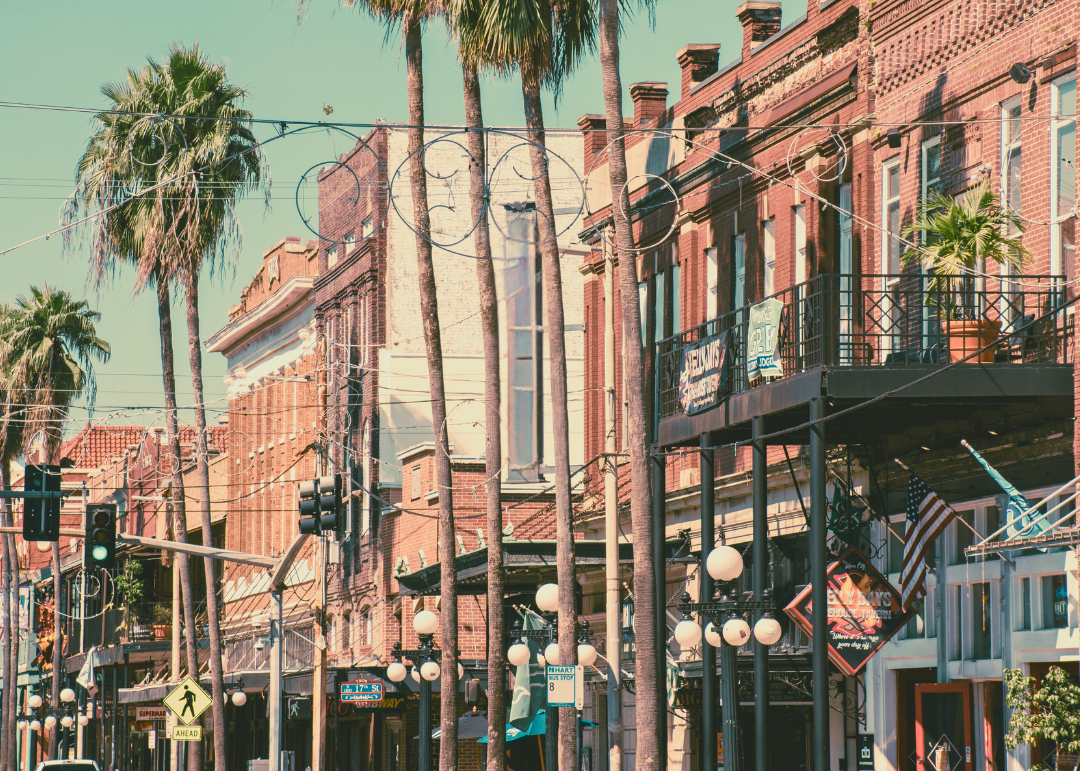
A Neighborhood Built on Connection Coffee is more than just a drink in Ybor City. In the 1880s, Cuban, Spanish, and Italian immigrants built this neighborhood around the cigar industry. Along with ...

That was exactly what I asked myself, sitting in a small café in Puerto Escondido with an espresso in hand that might have been the best I’ve ever tasted. But the bigger question was this: why aren...